For many drivers in Victorville, Apple Valley, and Hesperia, looking under the hood of a car can feel like trying to decode an ancient language. Modern vehicles are marvels of engineering, packed with complex computer systems, intricate mechanical networks, and specialized fluids. However, keeping your car running safely and efficiently shouldn’t require a degree in aerospace engineering. When you strip away the confusing technical jargon, routine car maintenance is actually incredibly straightforward. At its core, vehicle care is about preventing friction, managing heat, and replacing wearable parts before they have a chance to fail. By understanding the basics of these common services, you can protect your investment, save thousands of dollars in unnecessary repairs, and drive with absolute peace of mind across our beautiful desert landscape.
Operating a vehicle in the unique climate of the Mojave Desert brings its own set of challenges. Our intense summer heat, frequent windstorms that kick up fine dust, and dramatic temperature drops during winter nights create a demanding environment for any car, truck, or SUV. Dust particles act like sandpaper on moving parts, while the extreme July heat accelerates the breakdown of essential fluids and rubber components. That is why understanding your car’s basic needs is not just about avoiding a breakdown; it is about adapting to our rugged desert environment. This comprehensive guide is designed to explain the most common vehicle services in plain, easy-to-understand language, helping you become a more confident and informed vehicle owner.

We believe that an informed driver is a safer, happier driver. Whether you are commuting daily down the steep declines of the Cajon Pass or simply running errands around town, your vehicle relies on a few fundamental services to stay healthy. Throughout this guide, we will break down oil changes, brake systems, wheel alignments, and fluid flushes. We will explain exactly what these services do, why they are critical for desert driving, and how you can spot the warning signs that your car is crying out for attention. Let us demystify the world of auto repair together, starting with the single most important routine service your engine requires: the oil change.
How Often Do I Really Need an Oil Change in the Mojave Desert?
To understand oil change intervals, we first have to understand what motor oil actually does. Think of oil as the lifeblood of your engine. Inside your engine, metal parts spin and slide against each other thousands of times per minute. Without a thin, protective barrier of oil, this metal-on-metal friction would generate catastrophic heat, literally melting the engine components together within minutes. Motor oil lubricates these moving parts, absorbs heat, and carries away microscopic debris and carbon deposits to the oil filter. Over time, however, the intense heat and mechanical stress cause the oil to break down, losing its slipperiness and turning into a thick, dark sludge that can no longer protect your engine.
The type of oil your vehicle uses heavily influences how often it needs to be replaced. Conventional oil, derived from refined crude oil, typically needs to be changed every 3,000 to 5,000 miles. Synthetic oil, which is chemically engineered in a laboratory to have a highly consistent molecular structure, resists heat breakdown far better and can often last between 7,500 and 10,000 miles. However, the old ‘3,000-mile rule’ is largely a relic of the past for modern vehicles using synthetic blends, unless you are operating under what manufacturers classify as ‘severe driving conditions’—a category that perfectly describes daily life in the High Desert.
Living in Victorville, Hesperia, or Apple Valley means your vehicle regularly confronts extreme elements. Desert heat during our blistering summers can easily exceed 100 degrees Fahrenheit, forcing your engine to run hotter and putting extra thermal stress on your motor oil. Additionally, our regional winds carry fine, abrasive desert dust and sand. While your engine air filter does an admirable job of blocking this debris, microscopic particles can still find their way into the engine oil over time. This dust mixes with the oil, turning it into an abrasive polishing paste that accelerates engine wear.
Because of these environmental factors, local drivers should look closely at their owner’s manual under the ‘Severe Driving’ schedule. If you frequently drive in dusty conditions, idle for long periods in traffic, make short trips where the engine doesn’t fully warm up, or tow trailers up the pass, your oil should be changed more frequently than the standard manufacturer interval. For many modern Toyotas, this means shifting from a standard 10,000-mile synthetic interval down to a safer 5,000-mile or 6-month interval to guarantee the longest possible lifespan for your engine.
What Are Signs My Car Needs an Oil Change Right Away?
While keeping track of your mileage and calendar dates is the best way to maintain your vehicle, your car will often send clear signals when its oil has degraded or run dangerously low. Ignoring these warning signs can lead to severe engine damage, reduced fuel efficiency, and ultimately, a costly mechanical breakdown. Being able to recognize these indicators allows you to address the issue before it escalates into a major headache.
Pulling out your engine’s dipstick is the simplest diagnostic test you can perform. Fresh motor oil has a warm, honey-like amber color and is relatively translucent. As oil ages, it accumulates dirt, debris, and combustion byproducts, gradually turning dark brown and eventually pitch black. If your oil is dark black, thick, or gritty when rubbed between your fingers, it has fully degraded and lost its lubricating properties. Additionally, if the oil level is below the minimum mark on the dipstick, your engine is running dry and needs immediate attention.
Oil provides a thin cushion between moving metal components, which dampens the sound of the engine’s internal operations. When that cushion breaks down, you will start to hear the physical reality of metal parts contacting each other. If you notice a loud clicking, ticking, or knocking sound coming from under the hood—especially when starting the car cold or idling at a red light—it means your engine valves and pistons are not receiving adequate lubrication. This metal friction creates rapid wear and must be addressed immediately.
Smell and Dashboard Lights
If you smell a strong, burnt oil odor inside the cabin of your vehicle, you should immediately investigate. This often indicates an oil leak dripping onto hot engine parts or an engine that is severely overheating. Furthermore, never ignore the oil pressure warning light on your dashboard (which looks like an old-fashioned oil can). Unlike a service reminder, this light indicates a critical drop in oil pressure, meaning oil is not circulating through the engine. Pull over safely and shut off the engine immediately to avoid catastrophic failure.

How Often Do I Need a Brake Service or New Brake Pads?
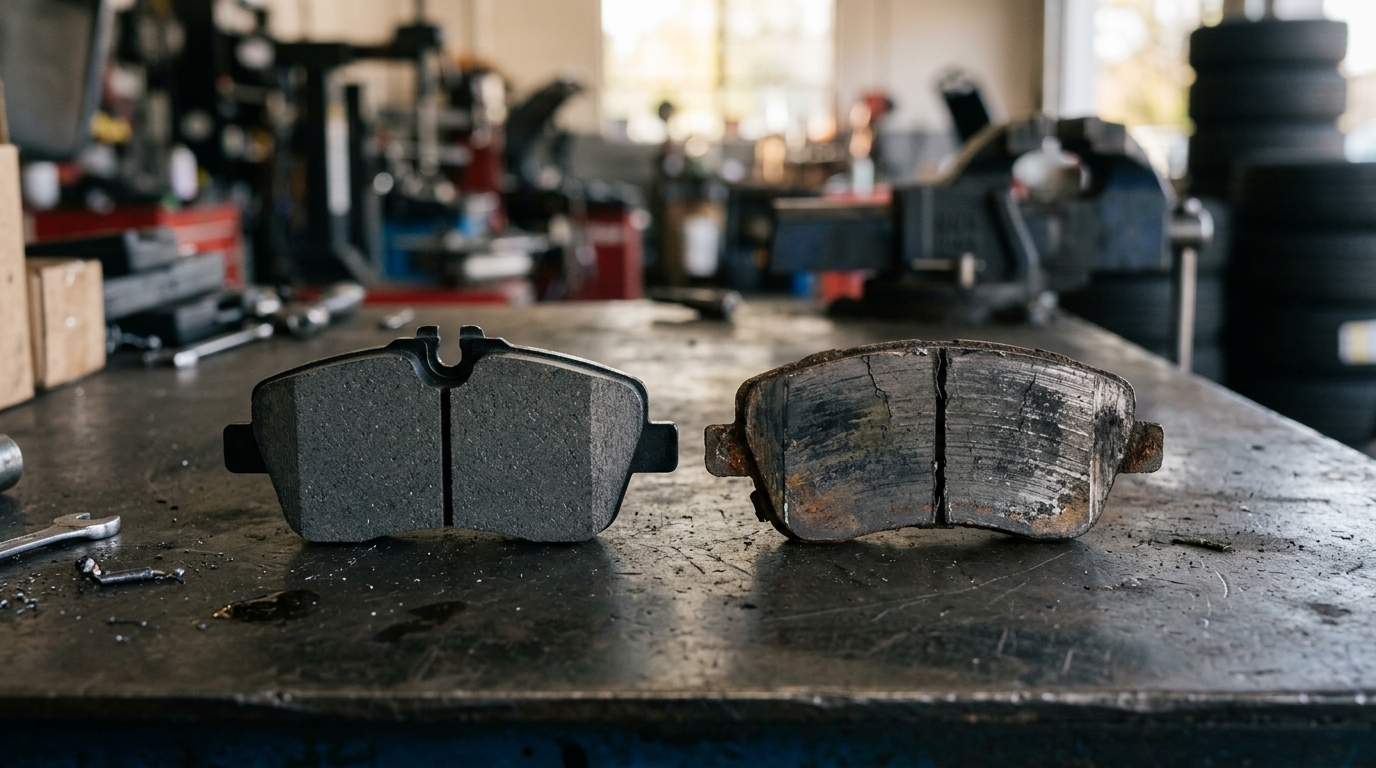
Your vehicle’s braking system is, without a doubt, its most critical safety feature. Understanding how it works is key to recognizing when it requires professional attention. When you step on the brake pedal, hydraulic fluid pushes thick, high-friction brake pads against flat, spinning metal discs called rotors. This action creates immense friction, which slows down and stops your heavy vehicle. Because brake pads are designed to wear away gradually to protect your expensive metal rotors, they are considered consumable items that must be replaced periodically. Over time, that friction material thins out, reducing your stopping power.
On average, brake pads last between 30,000 and 70,000 miles. However, this number varies wildly depending on your driving habits and local geography. For High Desert residents, driving conditions are uniquely taxing on brakes. If you commute down the Cajon Pass on the Interstate 15 freeway daily, you are subjecting your brakes to sustained, high-speed applications on steep descents. This constant braking generates extreme kinetic heat, causing the brake pads to wear down much faster than they would in flat, open geography. Likewise, the stop-and-go traffic along major corridors like Bear Valley Road or Highway 18 accelerates pad wear significantly.
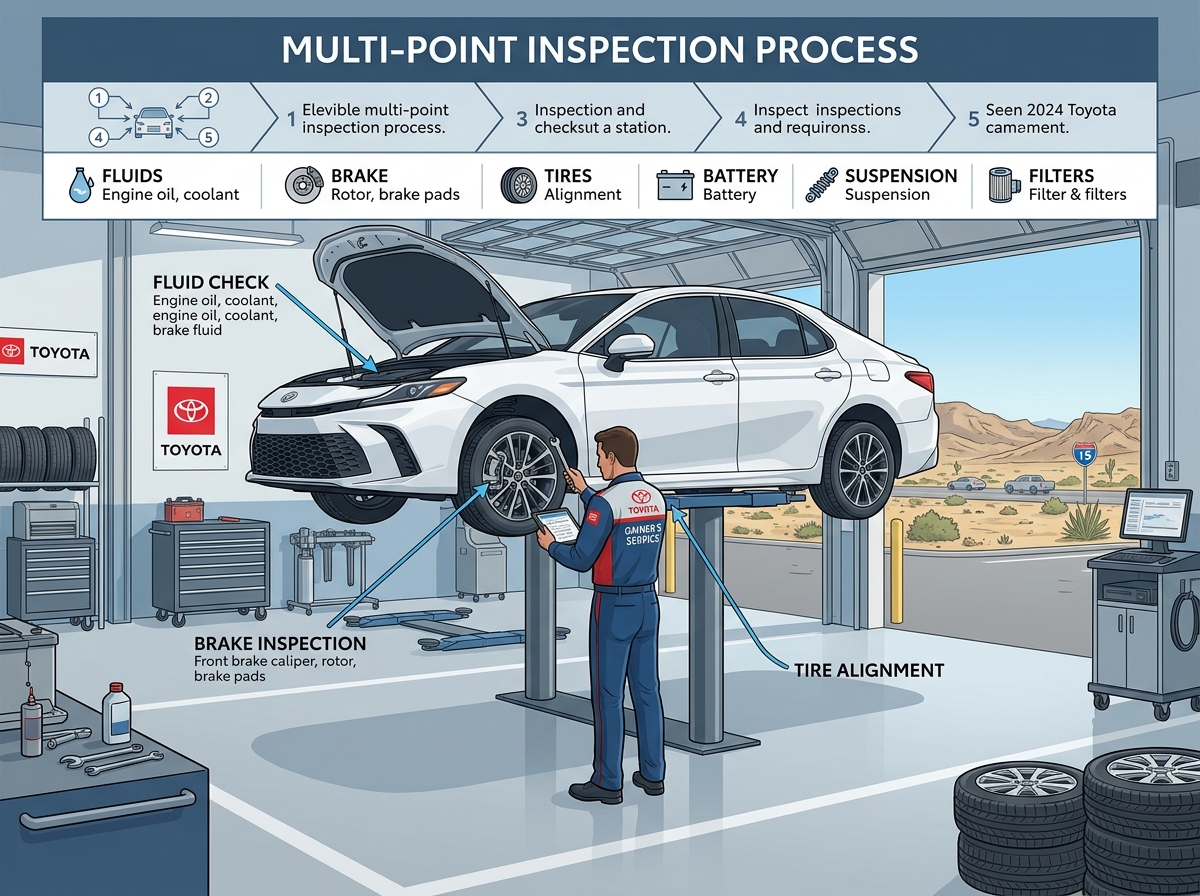
To maximize the lifespan of your brakes and avoid costly repairs, regular inspections are essential. During a routine brake service, a professional technician will measure the remaining thickness of your brake pads, inspect the surface of your rotors for groove wear or warping, check the condition of your brake calipers, and test the moisture levels in your brake fluid. Catching worn brake pads early prevents them from wearing down to their bare metal backing plates, which would otherwise gouge and ruin your rotors, transforming a simple pad replacement into an expensive full brake system overhaul.
We highly recommend having your brakes inspected during every tire rotation or oil change service. This proactive approach ensures you are never caught off guard by worn-out pads on a steep mountain descent. If you suspect your brakes are losing their effectiveness, do not delay. You can easily Schedule Service online with our specialized team to get a comprehensive, honest assessment of your stopping system before your next big commute.
Squeaks, Shudders, and Soft Pedals: Signs Your Brakes Need Professional Attention
Fortunately, modern braking systems are designed to communicate with you when they require attention. They feature built-in mechanical and sensory warnings that manifest as specific noises, physical sensations, or behavioral changes when you press the pedal. Learning to identify these symptoms can save you from a dangerous loss of stopping power and prevent costly damage to related steering and suspension components.
Squealing or Grinding Sounds
Most brake pads are equipped with small metal tabs called wear indicators. When the friction material wears down to a critical level, these tabs are exposed and rub against the rotor, producing a high-pitched squealing sound whenever you apply the brakes (or sometimes continuously while driving). If you ignore this squeal and the friction material is completely exhausted, you will hear a harsh, metallic grinding noise. This means bare metal is grinding against bare metal, destroying your rotors and severely reducing your ability to stop safely.
If you feel a distinct pulsing or shaking in your steering wheel or brake pedal when slowing down from freeway speeds, your brake rotors may be warped. This warping occurs when extreme heat—such as descending the Cajon Pass—distorts the perfectly flat surface of the metal rotor. As the brake pads clamp down on an uneven surface, they skip and slip, sending vibrations through your steering column and suspension. Warped rotors reduce tire contact with the road and increase overall stopping distances.
Soft or Spongy Brake Pedal
When you step on your brakes, the pedal should feel firm and responsive. If the pedal feels soft, spongy, or sinks almost to the floorboard before the brakes engage, there is a serious issue within the hydraulic system. This symptom can be caused by air bubbles in the brake lines, a leak in the brake fluid system, or a failing master cylinder. Because brake fluid absorbs moisture over time, driving in hot environments can cause that moisture to boil, creating air pockets that destroy the hydraulic pressure required to stop your vehicle.
How Can I Tell If My Car Needs an Alignment After Hitting High Desert Potholes?
To understand wheel alignment, it is helpful to picture how your vehicle’s tires contact the road. For optimal safety, handling, and tire life, all four wheels must point in the exact direction and angle specified by the vehicle’s manufacturer. Wheel alignment does not actually refer to adjusting the tires themselves; rather, it involves adjusting your vehicle’s complex steering and suspension components—the network of springs, shocks, struts, and linkages that connect your vehicle to its wheels. When these components are properly aligned, your car drives straight, absorbs bumps comfortably, and wears its tires down evenly.
Unfortunately, maintaining a perfect alignment is a constant battle in the High Desert. Our local roads face severe expansion and contraction due to extreme temperature swings, resulting in abrupt asphalt shifts and deep potholes. Additionally, driving on rugged, unpaved desert dirt trails or hitting a curb while navigating tight parking lots can instantly jar your delicate suspension out of spec. Even a minor impact can alter angles like camber (the inward or outward tilt of the tire), toe (the direction the tires point relative to each other), and caster (the angle of the steering pivot).
The most common symptom of a misaligned vehicle is pulling. If you are driving on a flat, straight road and find that the car constantly drifts or pulls hard toward the left or right when you briefly relax your grip on the steering wheel, your alignment is out of specification. You may also notice that your steering wheel is off-center or crooked even when your vehicle is traveling in a perfectly straight line. This forces you to constantly fight the steering wheel, causing driver fatigue and reducing your control over the vehicle in an emergency maneuvering situation.
Another critical indicator of poor alignment is rapid, uneven tire wear. If you inspect your tires and notice that the inner or outer edges of the tread are wearing down significantly faster than the center, your tires are dragging sideways across the pavement instead of rolling smoothly. This drastically shortens the lifespan of your expensive tires, costing you money prematurely. If you notice any of these signs after hitting a pothole, having a specialized technician measure and correct your wheel alignment using computerized alignment machinery is the best way to restore your vehicle’s factory handling.
Why Is It Important to Follow the Recommended Maintenance Schedule?
Every new vehicle comes with a factory-recommended maintenance schedule, often organized into specific mileage intervals like 5,000, 15,000, and 30,000 miles. Some drivers view these schedules as optional suggestions, but they are actually carefully engineered blueprints designed to maximize your vehicle’s reliability, safety, and longevity. Following this schedule is the ultimate form of preventive medicine for your car. It allows skilled technicians to systematically inspect, adjust, and replace components before they fail, saving you from the stress and massive expense of roadside breakdowns on remote desert highways.
Beyond preventing breakdowns, staying up-to-date on your factory maintenance schedule is critical for preserving your vehicle’s warranty. If a major powertrain component fails under warranty, manufacturers will look closely at your service history. If they find that key services like oil changes, fluid flushes, or belt replacements were neglected, they may deny your warranty claim, leaving you with a massive repair bill. Keeping clean, professional maintenance records is your insurance policy, ensuring that your warranty coverage remains fully intact. If you are driving a pre-owned model or looking to upgrade, you can check out our robust Used Vehicle Page or explore our latest offerings on our New Vehicle Page to find a model with a clean, documented maintenance history.
Additionally, a well-documented maintenance history significantly boosts your vehicle’s resale value. When the time comes to sell or trade in your car, savvy buyers will pay a premium for a vehicle that has been meticulously maintained according to the manufacturer’s guidelines. To see how much value your consistent maintenance has preserved in your current vehicle, you can quickly evaluate your car’s market value using our convenient KBB Instant Cash Offer tool. Investing a little time and money into routine services today yields massive financial dividends down the road, ensuring your vehicle remains a reliable asset.
Is It Better to Use a Dealer or an Independent Shop for Common Services?
When your vehicle requires service, you face a common choice: do you bring it back to a factory-authorized dealership or visit a local independent repair shop? While independent shops sometimes advertise slightly lower upfront labor rates, it is crucial to understand the substantial differences in training, equipment, parts quality, and warranty protection. A dealership’s service center is specialized; our technicians work on your specific make and model every single day, receiving continuous training directly from the manufacturer on the latest technologies, diagnostic procedures, and safety recalls.
Independent shops, by contrast, must work on dozens of different automotive brands. This requires their mechanics to be generalists, who may not be familiar with the unique engineering nuances of your specific Toyota. Furthermore, dealerships use state-of-the-art diagnostic computers calibrated specifically for your vehicle’s advanced computer networks, allowing us to pinpoint issues accurately the first time. This specialized knowledge prevents costly ‘guesswork’ repairs where parts are swapped out unnecessarily.
Another critical distinction lies in the parts used during service. Authorized dealerships use Original Equipment Manufacturer (OEM) parts, which are engineered to the exact specifications, materials, and safety tolerances of your original vehicle. These parts fit perfectly, perform optimally in extreme environments, and come backed by a robust nationwide warranty. Many independent shops utilize cheaper aftermarket parts, which are designed to fit a wide range of vehicles. These generic parts may use inferior materials, leading to premature failure under the intense summer heat of the Mojave Desert.
If you are looking for high-quality components, you can explore our specialized Parts Center to find genuine components, or directly Order Parts to ensure your vehicle is fitted with components built specifically for your model. Choosing factory-certified care guarantees that your vehicle’s safety, performance, and warranty remain completely uncompromised, providing long-term value that far outweighs any minor short-term savings.
The Real Cost of Neglecting Routine Car Care in Victorville, Hesperia, and Apple Valley
Living in the High Desert means dealing with weather and environmental extremes. While a neglected air filter or aging battery might survive unnoticed in milder coastal climates, the harsh conditions of our region will quickly expose any deferred maintenance. Neglecting basic care in this environment accelerates wear, resulting in expensive repairs and unexpected breakdowns.
Belts, Hoses, and Extreme Heat
The combination of scorching summer heat and low desert humidity is incredibly tough on rubber components. Over time, your engine’s drive belts and cooling hoses dry out, becoming brittle and developing tiny cracks. If a radiator hose bursts while driving, your engine will lose coolant and overheat rapidly, potentially warping the cylinder head or ruining the engine block. Regularly inspecting and replacing these rubber components before they fail is a simple, cost-effective way to avoid major engine damage.
Blowing Sand and Clogged Filters
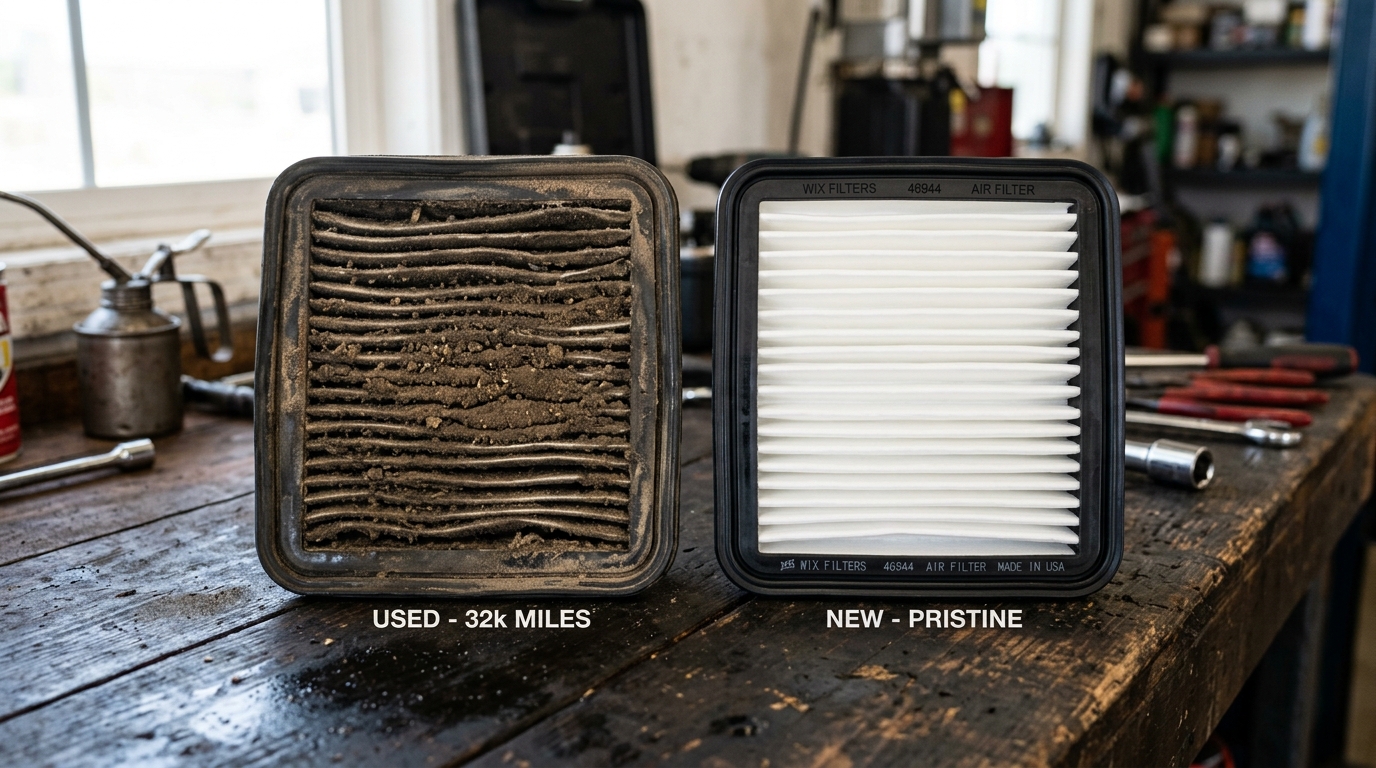
Desert windstorms regularly fill the air with fine dust and sand. Your engine air filter and cabin air filter act as protective barriers, catching this debris. However, as they clog, they restrict critical airflow. A clogged engine air filter starves your engine of oxygen, hurting fuel economy and performance. Meanwhile, a dirty cabin filter strains your air conditioning system, making it harder to keep the interior cool on hot summer days. Replacing these inexpensive filters keeps your vehicle breathing cleanly and efficiently.
Summer Heat and Battery Failure
Many drivers assume cold winter weather is the main enemy of car batteries, but extreme summer heat is actually far more damaging. High temperatures accelerate internal corrosion and cause the battery’s liquid electrolyte to evaporate. This weakens the battery, leading to sudden failure when you try to start your car. Routine testing of your battery’s charge capacity during scheduled maintenance ensures you can replace a weak battery before it leaves you stranded in a scorching hot parking lot.
A Simple Checklist to Help You Communicate with Your Service Advisor
Describing a strange car issue to a service professional can sometimes feel intimidating, especially if you don’t know the exact technical terms. However, you don’t need to speak mechanic jargon to communicate effectively. Your service advisor’s primary goal is to understand what you are experiencing so they can relay accurate information to the technician. By paying attention to a few simple details, you can help them diagnose the issue quickly and accurately, saving time and ensuring a successful repair.
Before you visit or call, take a moment to run through this simple checklist and note down what you observe: • What does it sound like? Try to describe the noise using common terms. Is it a high-pitched squeal, a dull metallic clunk, a rhythmic ticking, or a low roaring sound? • When does it happen? Does the sound occur only when the vehicle is cold in the morning, when accelerating uphill, when turning the steering wheel, or when pressing the brake pedal? • What does it feel like? Do you feel a vibration in your steering wheel, a pulsing in your foot, or a pull to one side of the road? Does the transmission shift smoothly, or does it hesitate? • Are there any visual clues? Have you noticed any fluid spots on your driveway? If so, what color are they (red, green, clear, or dark brown)? Are there any warning lights illuminated on your dashboard? • When did it start? Did the issue begin suddenly after hitting a deep pothole, or has it developed gradually over several weeks?
Armed with these observations, you can confidently explain the issue in your own words. Your service advisor will ask clarifying questions to build a complete picture of the situation. This partnership ensures our factory-trained technicians can quickly locate and resolve the issue, getting you back on the road safely. If you are planning to finance an upcoming major repair or upgrade your vehicle entirely, you can easily complete our secure Credit Application online to explore flexible payment options that suit your budget.
Why Valley Hi Toyota is the High Desert’s Trusted Partner for Simple, Honest Car Care
At Valley Hi Toyota, we believe that maintaining your vehicle should be a straightforward, transparent, and stress-free experience. We have built our reputation in Victorville and across the High Desert on a simple foundation: clear communication, upfront pricing, and absolute honesty. We know that auto repair can sometimes feel overwhelming, which is why our service advisors take the time to explain every recommended service in plain language. We will never use confusing jargon to pressure you into unnecessary work, and we always provide clear, itemized estimates before starting any repair.
Our modern service center is designed around your comfort and convenience. While our factory-trained technicians work on your vehicle, you can relax in our comfortable guest lounge, complete with complimentary refreshments, high-speed Wi-Fi, and a quiet workstation area. For those with busy schedules, we offer convenient online service scheduling, regular service specials to help you save on routine maintenance, and a dedicated shuttle service to keep your day moving smoothly.
By choosing Valley Hi Toyota, you are choosing a team that is deeply invested in our local community. We know the unique demands that High Desert driving puts on your vehicle because we live and drive here too. Whether you need a quick, routine oil change, a comprehensive brake overhaul, or a precision wheel alignment, we treat every vehicle as if it were our own. We use only genuine OEM parts and the latest diagnostic tools to ensure your car, truck, or SUV continues to perform safely and reliably for miles to come.

Ready to Keep Your Vehicle Running Like New? Schedule Your Next Service at Valley Hi Toyota Today
Don’t wait for a small, easily manageable maintenance need to transform into an expensive, stressful mechanical breakdown on a hot summer afternoon. Taking proactive care of your vehicle today is the easiest, most cost-effective way to preserve its safety, reliability, and long-term resale value. Whether you are due for a quick engine oil change, suspect your brakes need attention after a long commute down the Cajon Pass, or want to restore your steering with a precise wheel alignment after hitting a deep pothole, our experienced team is here to help.
Our convenient online booking tool allows you to select a time that fits your busy schedule in just a few clicks. Simply visit our website to lock in your appointment, and let our factory-certified technicians handle the rest with the honesty, transparency, and care you deserve. Experience the peace of mind that comes with professional automotive maintenance from a team that truly cares about your safety.