

Kelley Blue Book Compares the Camry with the Accord Hybrid
It is a long-standing, ongoing rivalry, not quite as old as Army vs. Navy, but definitely older than “paper vs. plastic.” Starting in the 80s, the Toyota Camry and Honda Accord gradually displaced the existing sales leaders to become the most popular family sedans in the country. The fact that they replaced domestic-brand models mattered little as both have been built in the U.S. for decades. Kelley Blue Book recently compared the Camry (which is now an all-hybrid lineup) with the Accord Hybrid. Valley Hi Toyota highlights the key points.
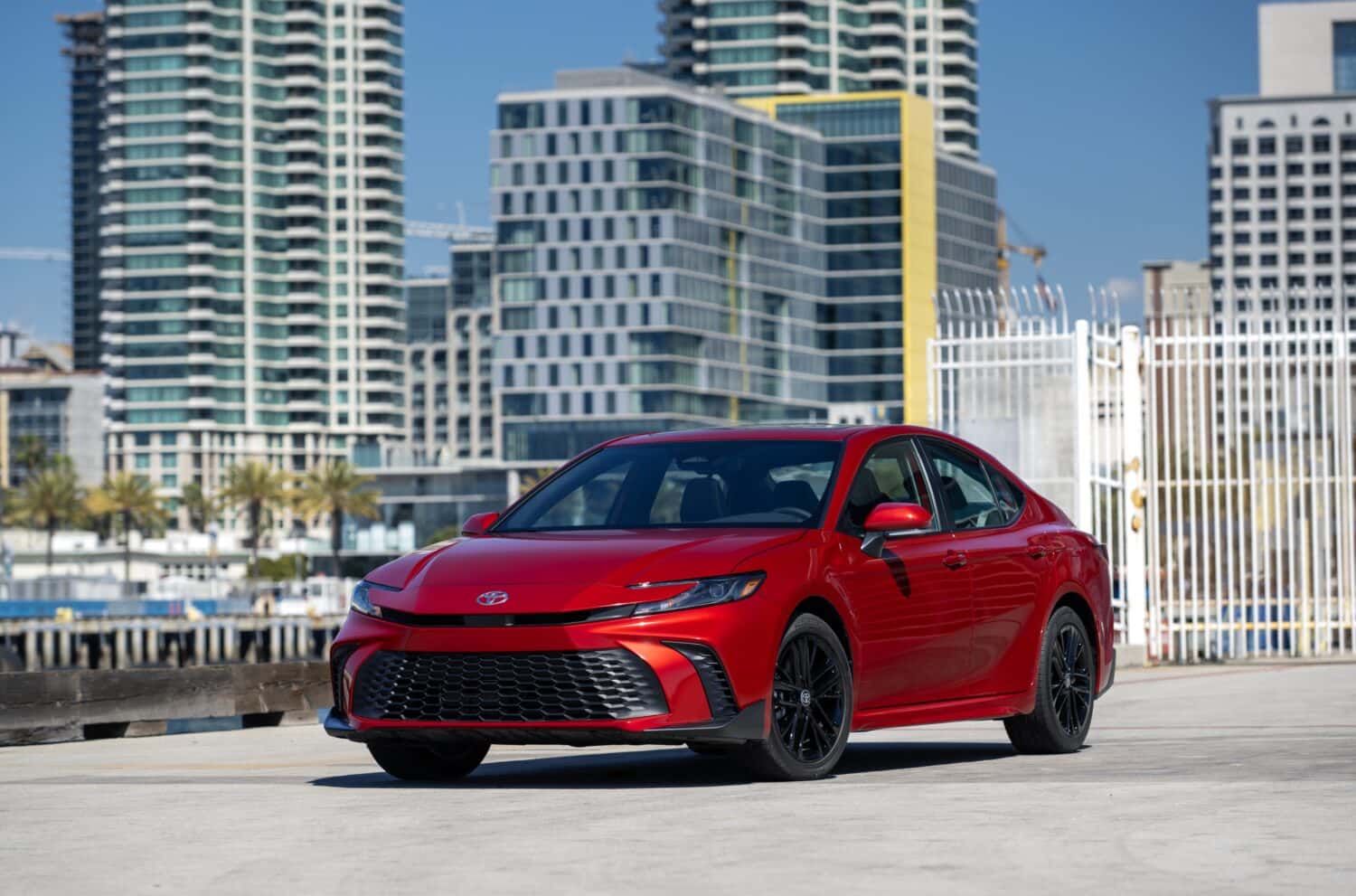
Automotive reviewers have been stating for some years now that the hybrid versions of these sedans are the ones to get. Toyota agreed, now that all Camrys have hybrid drivetrains. Honda isn’t quite there yet; instead, it is splitting the model line into non-hybrid lower-grade models and hybrid higher-grade models. This result is an immediate Camry advantage for the budget-minded, as its starting MSRP is $29,795, whereas you must move up to the $34,805 Accord Sport to obtain the hybrid drivetrain.
The hybrid systems are quite different as well. The Camry uses the same parallel system found in other Toyota models, in which both the 2.5-liter engine, via a CVT, and an electric motor power the drive wheels at times, with a central processor determining the optimal blend of each to use at any given moment. The Accord is more of a series system in which, for much of the time, the 1.5-liter turbocharged engine is simply a generator for an electric motor that drives the wheels. Only when the vehicle is at steady highway speeds does the engine directly power the drive wheels. There is effectively no transmission.
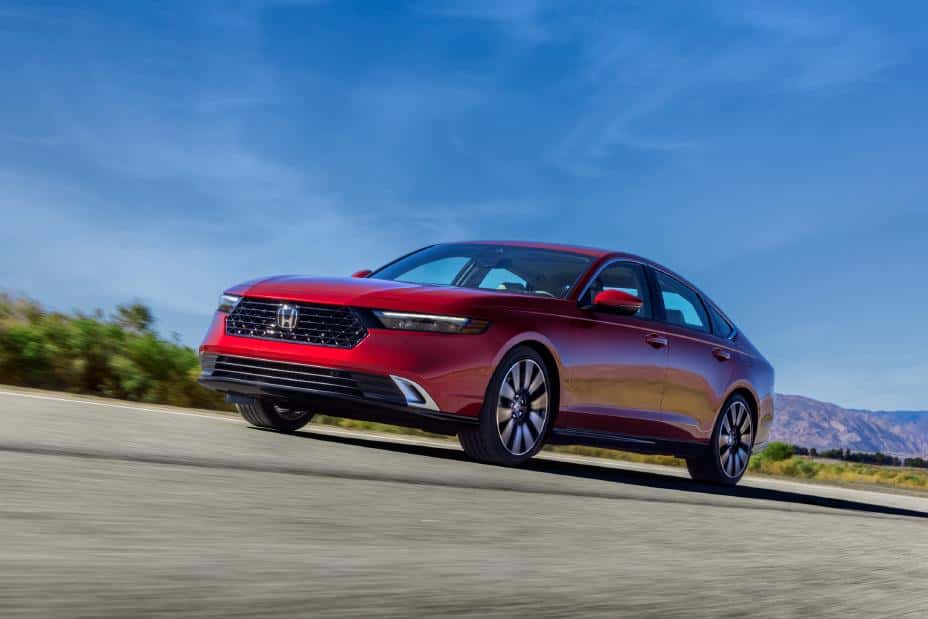
Each system has its advantages, but when it comes to fuel mileage, one of the main reasons for choosing a hybrid sedan, the Camry has a clear advantage, especially on the highway. Specifically, the front-wheel drive (FWD) Camry can have an EPA-estimated city/highway/combined mileage of up to 53/50/51 for the LE model, with most others being rated at 48/47/47. The Accord Hybrid is rated at 46/41/44. We specify FWD for the Camry because it can also be equipped with all-wheel drive, a feature unavailable on the Accord. With AWD, the LE still achieves 51/49/50, while most other AWD models are rated at 46 mpg for both city and highway.
Of course, there is more to these models than just fuel mileage. They trade off in power advantages, with the Camry having 225 horsepower to the Accord’s 204, while the Honda counters with 247 lb-ft of torque compared to 184 lb-ft for the Camry.
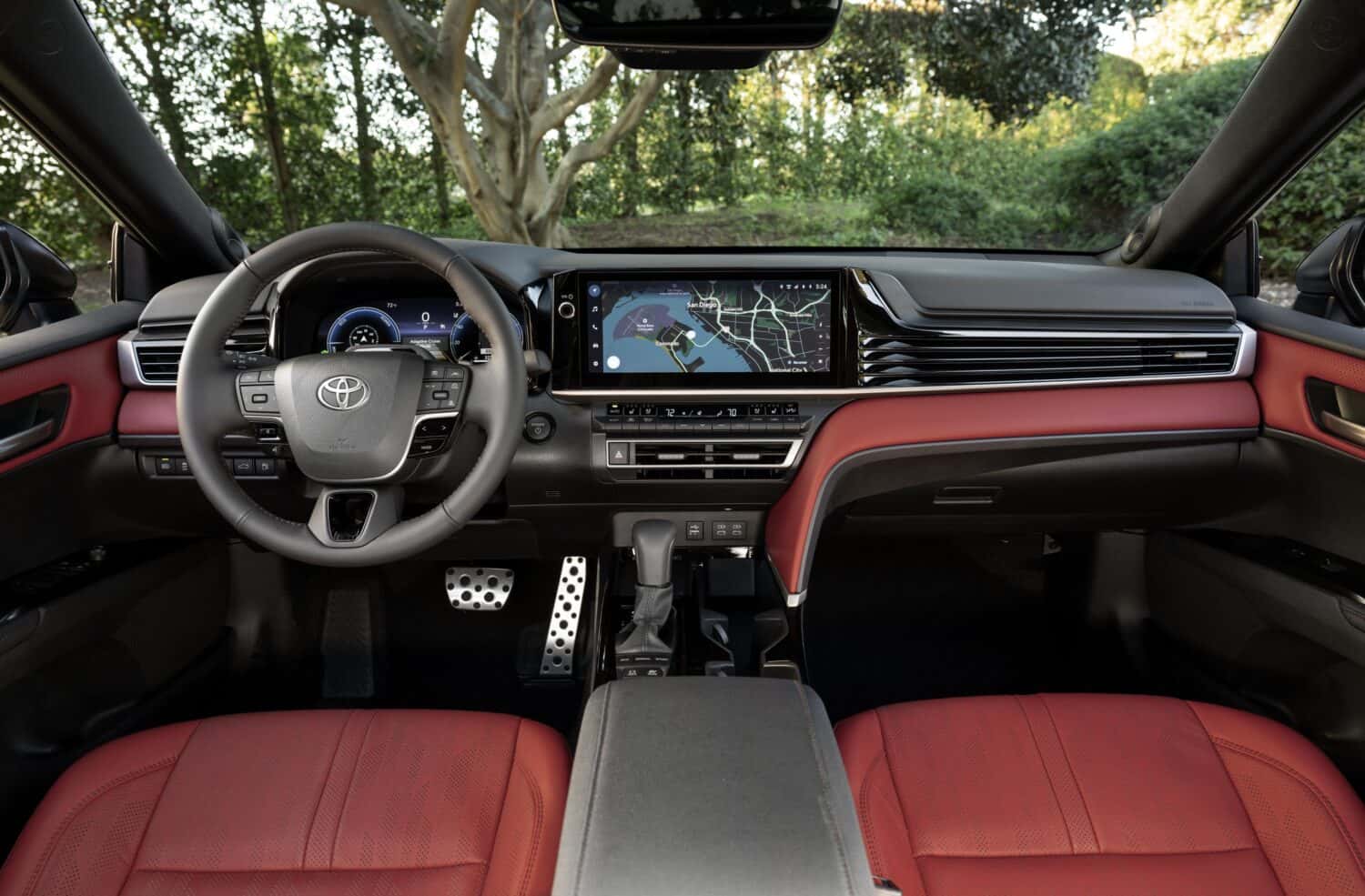
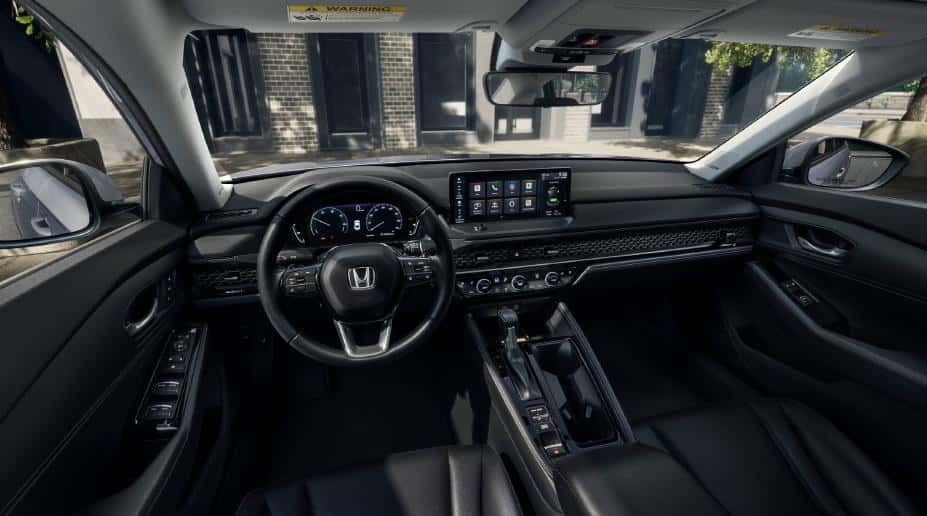
As modern mid-size sedans, both are quite spacious, although the Accord offers just short of three inches more rear legroom (38.0 vs. 42.3 inches). It also features a slightly larger trunk at 15.1 versus 16.7 cubic feet.
Neither model gives the other an edge in safety. Both come with a comprehensive set of standard safety and driver assistance features, both have an overall 5-star rating from the NHTSA with 5-star ratings on all impact tests, and both earned a TOP SAFETY PICK + rating from the IIHS.
KBB acknowledges that these are both good vehicles but gives the nod to the Camry: “Both of these hybrid sedans are truly outstanding, but the Toyota Camry is slightly better overall. Its fuel economy and resale value are both a little better than those of the Honda Accord Hybrid.”
With a combination of comfort, economy, safety, quality, and reliability, it is hard to beat the Camry, which is why it remains so popular in a world of crossover SUVs. Explore all that the Camry has to offer with our extensive inventory selection at Valley Hi Toyota.
0 comment(s) so far on Kelley Blue Book Compares the Camry with the Accord Hybrid