The new All-Electric 2026 Toyota C-HR. The High Desert’s Commuter
July 22nd, 2026 by

2026 Toyota C-HR vs 2026 Hyundai IONIQ 5


Evaluating the rapidly growing electric vehicle segment reveals two distinct approaches to modern zero-emission driving. This head-to-head comparison examines how the style-forward, standard all-wheel-drive 2026 Toyota C-HR challenges the retro-futuristic Hyundai IONIQ 5. We will analyze real-world performance, high desert capability, standard amenities, and long-term value to help you make an informed decision.


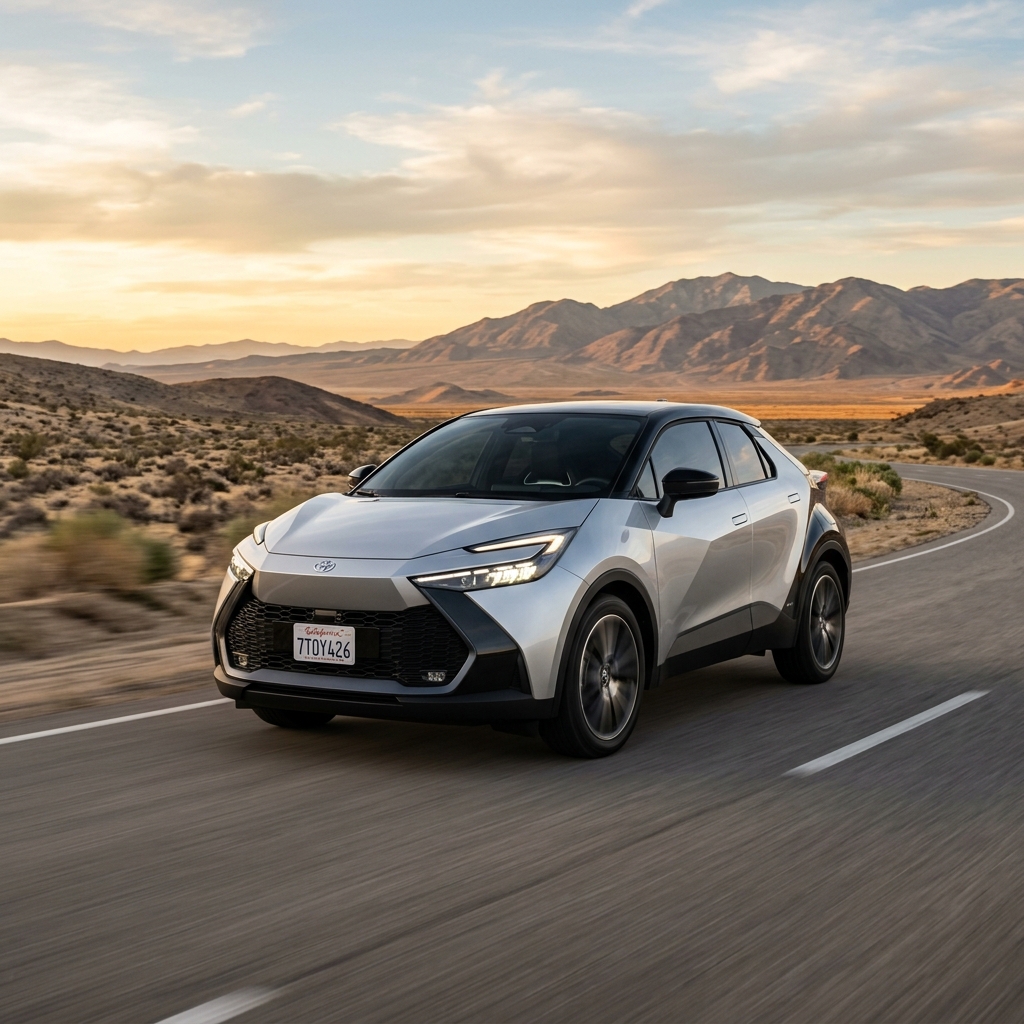
Silver Toyota C-HR driving on a winding desert road during a golden sunset. (Representative image for illustration purposes only. Actual vehicle may vary based on trim and configuration.)

Why Victorville Families Are Choosing Between the 2026 Toyota C-HR and Hyundai IONIQ 5


Selecting an electric vehicle in the high desert involves balancing daily commuting costs with the rugged demands of local geography. The 2026 Toyota C-HR returns to the market with a dramatic shift in identity, transitioning from a modest gasoline hatchback into a premium, performance-oriented battery electric vehicle. This bold crossover is designed to serve as an athletic, style-forward option that prioritizes driver engagement and modern aesthetics. By offering standard dual-motor traction, it directly challenges more expensive alternatives that require costly upgrades just to secure all-weather capability.


In contrast, the 2026 Hyundai IONIQ 5 positions itself as a retro-futuristic crossover with a lounge-like interior. While it boasts unique styling cues, its entry-level trims restrict drivers to a single-motor configuration. This fundamental difference in standard equipment is crucial for local buyers. Commuters navigating the daily drive through Victorville need a vehicle that handles both paved highways and sandy, wind-swept roads without hesitation.


When analyzing the financial commitment, the value proposition of the Toyota C-HR becomes immediately clear. The Toyota lineup is streamlined into two highly competitive, sport-minded configurations: the SE starting at a base MSRP of $37,000 and the premium XSE at $39,000, both subject to a $1,450 destination charge. The Hyundai IONIQ 5 starts its rear-wheel-drive lineup with the SE at $37,500 and the SEL at $39,800, stretching up to the Limited at $45,075, all carrying a higher $1,600 destination charge.


Because the Toyota C-HR includes all-wheel drive as standard equipment at its entry point, it delivers superior mechanical value out of the gate. Buyers interested in exploring these competitive price structures can begin the process by pre-qualifying for financing online to see how easily these modern electric crossovers fit into a household budget. For those looking to compare these new arrivals against existing market alternatives, reviewing our high-quality pre-owned inventory provides an excellent overview of how well Toyota models retain their long-term value.


Dimensions & Capacity


Capacity and dimensions by trim


Specification 2026 Toyota C-HR 2026 Hyundai IONIQ 5
Seating 5 5
Cargo 25.3 cu ft 26.3 cu ft
Curb weight 4,322 lbs 4,557 lbs


Which 2026 Model Offers Better Cargo and Passenger Space for Desert Adventures?
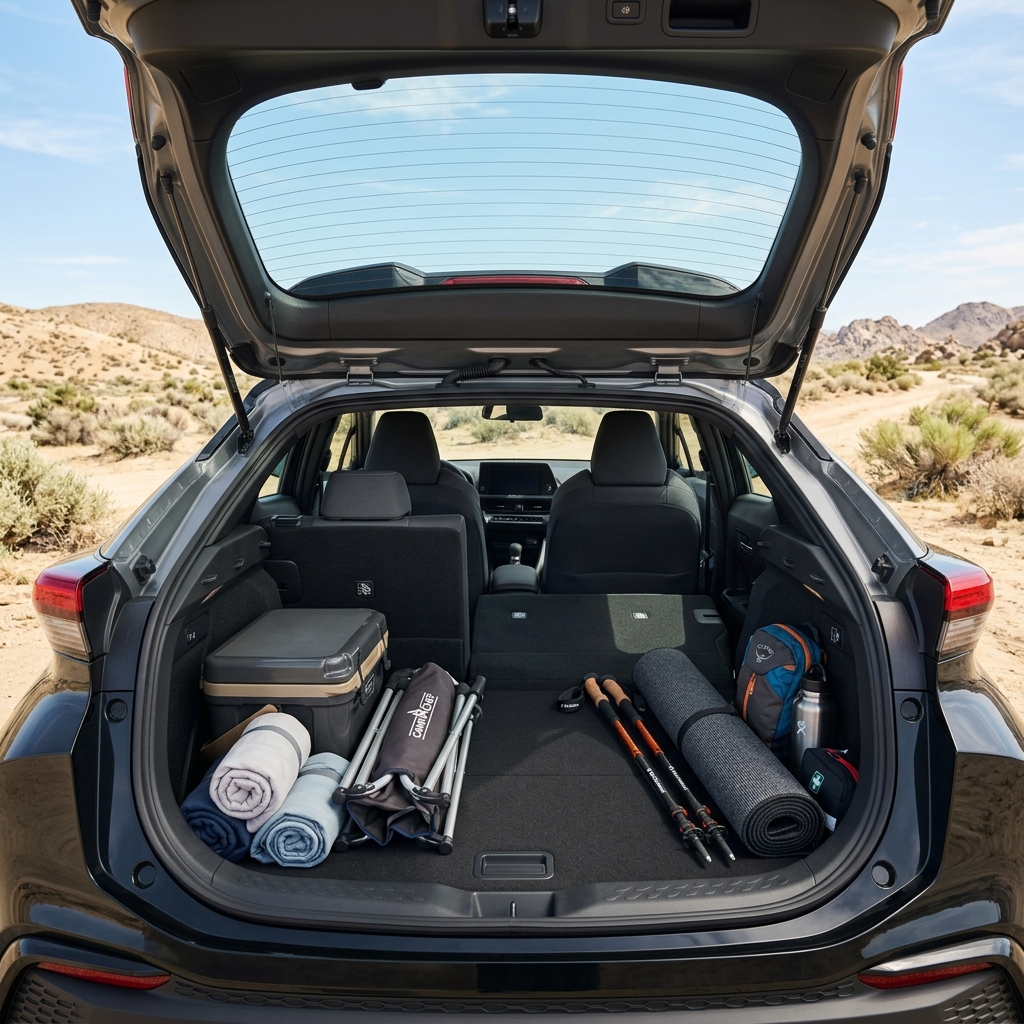
An open car trunk packed with camping and hiking gear, including a cooler, blankets, chair, and trekking poles in a desert. (Representative image for illustration purposes only. Actual vehicle may vary based on trim and configuration.)


Imagine packing up for a weekend excursion to the scenic Mojave Narrows Regional Park, loading up ice chests, folding chairs, and outdoor gear. For these local adventures, interior packaging and structural efficiency dictate how comfortable your journey will be. Both vehicles are configured to accommodate up to 5 passengers, but they distribute their interior volume in very different ways. The Toyota C-HR utilizes an athletic, coupe-like silhouette that focuses heavily on front-cabin comfort and driver-centric ergonomics, making it feel like a personal high-tech cockpit.


The Hyundai IONIQ 5 focuses on maximizing cabin volume with a flat-floor layout. It offers a cargo capacity of about 26 cu ft behind the second row, which is slightly larger than the about 25 cu ft found in the Toyota C-HR. However, this marginal difference of a single cubic foot in cargo space is easily offset by the Toyota C-HR and its highly versatile packaging. The C-HR features standard 60/40 Split-Folding Rear Seats that fold completely flat, allowing you to easily slide in longer items like walking sticks, shelter canopies, or sporting gear.


Weight also plays a significant role in how these vehicles handle local terrain. The Toyota C-HR has a curb weight of 4,322 lbs in the SE trim and 4,366 lbs in the XSE trim. This makes it substantially lighter than the Hyundai IONIQ 5, which weighs 4,376 lbs in its base form and climbs to a heavy 4,557 lbs in the Limited trim. The lighter footprint of the C-HR translates directly into a more agile, responsive driving experience around Victorville.


To experience this nimble handling firsthand, you can browse our brand-new vehicle inventory to locate the perfect model for your driveway. If you are planning to transition from your current vehicle into a new electric crossover, you can also value your trade-in online to secure a highly competitive offer toward your upgrade.


Engine & Performance


Powertrain specs by trim


Specification 2026 Toyota C-HR 2026 Hyundai IONIQ 5
Engine Dual Motor Single Motor
Horsepower 338 hp 225 hp
Torque 323 lb-ft 258 lb-ft
Transmission 1-speed direct drive single-speed reduction gear
Drivetrain All-wheel drive Rear-wheel drive


Performance and Driving Experience Tailored to Desert Terrain
 

Are you prepared for the diverse driving conditions of the high desert, where steep mountain passes and loose sandy shoulders demand absolute mechanical confidence? The performance comparison between these two electric crossovers reveals a massive disparity in standard capability. The 2026 Toyota C-HR comes standard across all trims with a potent Dual Motor powertrain that produces an impressive 338 hp and 323 lb-ft of torque. This power is routed through a seamless 1-speed direct drive transmission, delivering instant acceleration and robust climbing power.


Conversely, the standard configurations of the 2026 Hyundai IONIQ 5 utilize a Single Motor setup. This rear-wheel-drive layout generates only 225 hp and 258 lb-ft of torque, managed by a single-speed reduction gear transmission. For drivers in Victorville, relying on a rear-wheel-drive electric vehicle can be a distinct disadvantage when encountering patches of deep sand or navigating steep, winding roads. The Toyota C-HR and its standard All-wheel drive system continuously monitor traction at all four wheels, instantly distributing torque to prevent slippage.


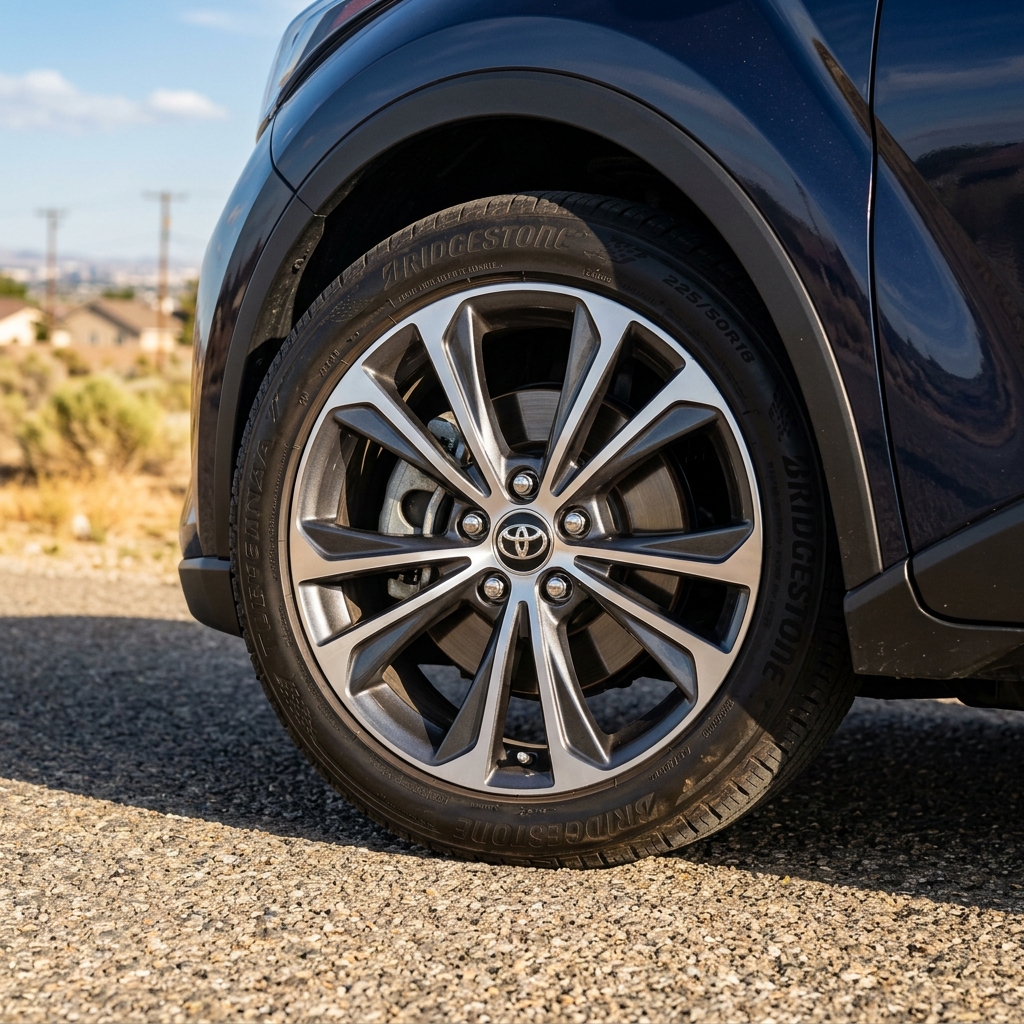
Furthermore, the Toyota C-HR features an advanced Adjustable Regenerative Braking system equipped with steering wheel-mounted paddle shifters. This setup allows you to customize the deceleration force, enabling near one-pedal driving that captures kinetic energy while descending steep desert grades. The vehicle also rides on a sophisticated four-wheel independent suspension with front and rear stabilizer bars, which works in harmony with standard 18-Inch Machined Alloy Wheels on the SE trim to absorb road imperfections. The result is a composed, quiet, and highly engaging driving experience that makes daily highway commutes feel effortless.


Close-up of a Toyota alloy wheel with a Bridgestone tire on a dark blue SUV parked on a gravel road. (Representative image for illustration purposes only. Actual vehicle may vary based on trim and configuration.)

Fuel Economy


Fuel economy and range by trim


Specification 2026 Toyota C-HR 2026 Hyundai IONIQ 5
Battery (kWh) 74.7 84
EV range 287 miles 318 miles
MPG 129 city / 100 hwy / 114 combined


Fuel Efficiency and Electric Range: Saving on Commutes and Weekend Trips
 

A specific stat to consider is the cost of operating an electric vehicle over a long suburban commute. High desert drivers frequently cover long distances on highway routes, making energy efficiency and battery management primary concerns. The 2026 Toyota C-HR is equipped with a highly efficient 74.7 kWh lithium-ion battery pack. This power source enables an EPA-estimated EV range of 287 miles on the SE trim, while the larger wheel package on the XSE trim delivers a highly competitive 273 miles of range.


The Hyundai IONIQ 5 features a larger 84 kWh battery pack that provides 318 miles of range. On paper, the Hyundai battery holds a slight range advantage, but it comes at the cost of carrying a much heavier battery pack that increases the vehicle’s curb weight. The IONIQ 5 Limited achieves an EPA-estimated fuel economy rating of 129 city / 100 hwy / 114 combined MPG equivalent.


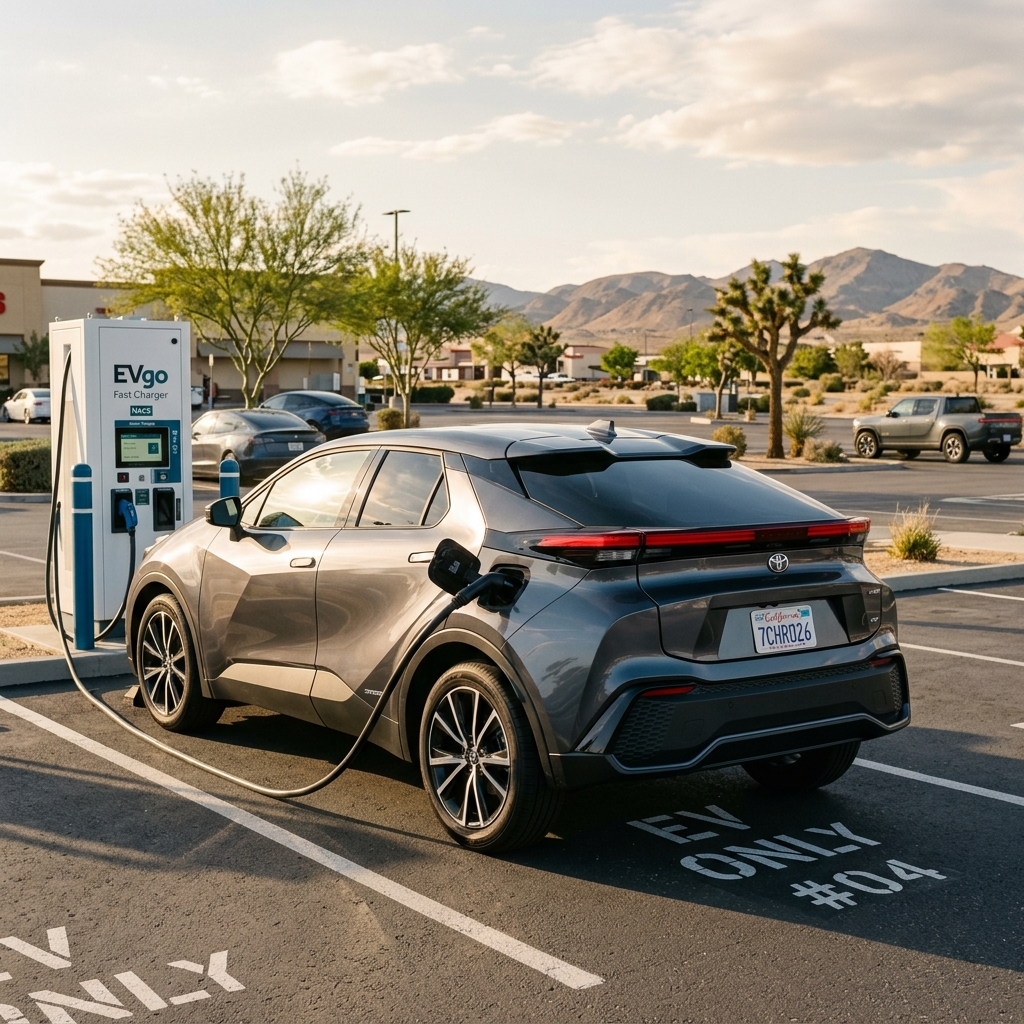
When it comes to recharging, both vehicles offer modern convenience, but the Toyota C-HR is designed to integrate seamlessly into existing public networks. The C-HR features a standard North American Charging Standard (NACS) port and includes a standard NACS-to-CCS adapter, giving you immediate access to the most reliable fast-charging stations. With a maximum DC fast-charging speed of 150 kW and an 11 kW onboard AC charger, the Toyota C-HR can quickly replenish its battery at home or on the road, ensuring you spend less time waiting and more time driving.


A gray electric Toyota SUV plugged into an EVgo fast charger in a sunny California parking lot with mountains. (Representative image for illustration purposes only. Actual vehicle may vary based on trim and configuration.)

Tech Features That Keep Drivers Connected

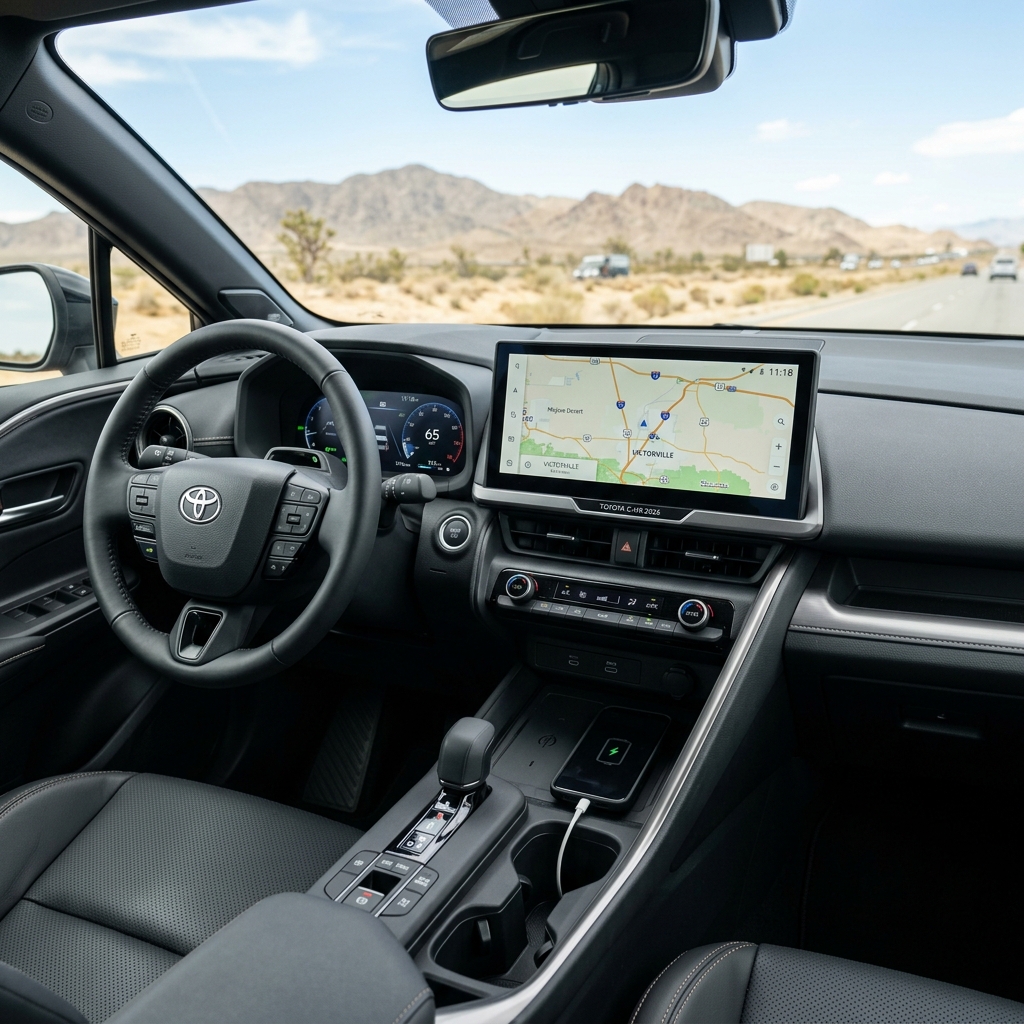
Interior view of a Toyota dashboard showing the steering wheel, infotainment screen with GPS, and desert highway ahead. (Representative image for illustration purposes only. Actual vehicle may vary based on trim and configuration.)


A common misconception is that all modern electric vehicles offer the same level of interior technology and screen usability. Toyota refutes this by equipping the 2026 Toyota C-HR with a class-leading infotainment experience designed for modern, connected lifestyles. Sitting proudly in the center of the dashboard is a standard 14.0-Inch Toyota Audio Multimedia Touchscreen. This gorgeous, high-resolution display is significantly larger than the 12.3-inch screen found in the Hyundai IONIQ 5, offering clearer graphics and more intuitive menu structures.


This advanced system includes a Cloud Navigation System supported by a standard Drive Connect three-year trial. This connected technology provides real-time traffic updates and Google points-of-interest data, ensuring you can navigate busy suburban corridors with ease. Smartphone integration is entirely seamless thanks to standard Wireless Apple CarPlay & Android Auto compatibility. To keep your mobile devices powered without cluttering the cabin with cords, the C-HR also features standard Dual Qi Wireless Charging Pads located conveniently in the center console.


The driver is kept informed via a standard 7-Inch Digital Instrument Display that presents crucial driving data, battery status, and safety alerts directly in your line of sight. Audio entertainment is delivered through a clear 6-Speaker Audio System, though audiophiles can upgrade the XSE trim with a premium JBL sound system. With multiple high-power USB-C ports distributed throughout the cabin, every passenger can stay connected and fully charged during long desert journeys.


Safety Innovations Designed for Peace of Mind on Desert Highways and City Streets


Recent highway safety studies emphasize that driver assistance systems are most effective when they are standard, intuitive, and active from the moment you start the vehicle. The 2026 Toyota C-HR sets a high standard for occupant protection by offering Toyota Safety Sense 3.0 (TSS 3.0) as standard equipment on every trim level. This comprehensive safety suite is engineered to act as an extra set of eyes, helping you navigate both crowded parking lots and high-speed desert highways with complete confidence.


The TSS 3.0 suite includes several cutting-edge active safety technologies:

  • Pre-Collision System with Pedestrian Detection
  • Lane Departure Alert with Steering Assist
  • Lane Tracing Assist
  • Road Sign Assist
  • Automatic High Beams
  • Proactive Driving Assist


In addition to the TSS 3.0 suite, the Toyota C-HR features standard Blind Spot Monitor with Steering Assist and a highly responsive Rear Cross-Traffic Alert with Automatic Braking system. Passive safety is equally robust, anchored by an advanced 8 Airbags system that includes dual front, side seat-mounted, curtain overhead, and specialized driver and passenger knee airbags. While the Hyundai IONIQ 5 offers its own safety suite, many of its most advanced driver-assist features are restricted to the expensive Limited trim, whereas Toyota prioritizes your peace of mind by making comprehensive protection standard.


Warranty, Maintenance, and Local Service Support for 2026 Toyota C-HR and Hyundai IONIQ 5 Owners


When I am helping drivers transition into their very first electric vehicle, the conversation always turns to long-term ownership costs and maintenance support. Investing in an electric crossover is a long-term commitment, and having a trusted, local service partner makes all the difference. Every new 2026 Toyota C-HR is backed by a comprehensive manufacturer warranty package, which includes specialized coverage for the high-voltage hybrid and electric battery components to ensure your investment is protected for years to come.


Furthermore, Toyota owners enjoy the peace of mind that comes with factory-backed roadside assistance. If you ever encounter an unexpected situation on the road, you can rely exclusively on manufacturer expertise by contacting the official support line at Toyota Roadside Assistance: 1-800-444-4195. This program connects you directly with certified technicians who understand the unique engineering of your electric vehicle, ensuring genuine parts are used for any necessary recovery.


To keep your crossover performing at its peak, our state-of-the-art service department is fully equipped with specialized diagnostic tools and factory-trained technicians. Whether you need a routine tire rotation, a multi-point inspection, or software updates, you can easily prepare by scheduling a service appointment online at your convenience. For drivers who prefer to handle minor maintenance or want to customize their vehicle, our parts department makes it simple to order genuine OEM parts directly. You can also explore our parts and accessories catalog to find custom-fit cargo organizers, all-weather liners, and stylish lifestyle gear designed specifically for your vehicle.


Pricing


Manufacturer-listed pricing per trim, across compared vehicles.


2026 Toyota C-HR Trim MSRP 2026 Hyundai IONIQ 5 Trim MSRP
SE $37,000 SE $37,500
XSE $39,000 SEL $39,800
Limited $45,075


Frequently Asked Questions: Choosing Between the 2026 Toyota C-HR and Hyundai IONIQ 5


Which vehicle is the better overall choice for Victorville drivers?
The 2026 Toyota C-HR is the superior overall choice for local drivers. By offering a standard dual-motor all-wheel-drive system, a more accessible starting price, and a massive 14.0-inch touchscreen, the Toyota C-HR delivers a highly capable and premium driving experience without requiring the expensive trim upgrades demanded by the Hyundai IONIQ 5.


Does the 2026 Toyota C-HR offer standard all-wheel drive?
Yes, the 2026 Toyota C-HR features a standard AWD Dual-Motor Powertrain across its entire lineup, including the SE and XSE trims. The Hyundai IONIQ 5 requires a significant price premium to upgrade from its standard rear-wheel-drive configuration to an all-wheel-drive setup.


How does the touchscreen technology compare between these two models?
The Toyota C-HR comes standard with a massive 14.0-Inch Toyota Audio Multimedia Touchscreen, which features wireless smartphone integration and cloud-based navigation. The Hyundai IONIQ 5 is equipped with a smaller 12.3-inch touchscreen, giving the Toyota a clear advantage in screen real estate and modern usability.


Where can I test drive the new 2026 Toyota C-HR?
You can experience the athletic handling, instant torque, and premium technology of the 2026 Toyota C-HR by visiting our convenient Victorville dealership showroom. Our professional team is ready to answer all your questions, demonstrate key features, and help you find the perfect electric crossover for your lifestyle. To speak with a product specialist or confirm vehicle availability before your visit, please give our team a call directly at (866) 632-6290.


© 2026 Valley Hi Toyota. All rights reserved.


Posted in Uncategorized