

Winterizing Your Toyota for Big Bear, Vegas & Holiday Trips
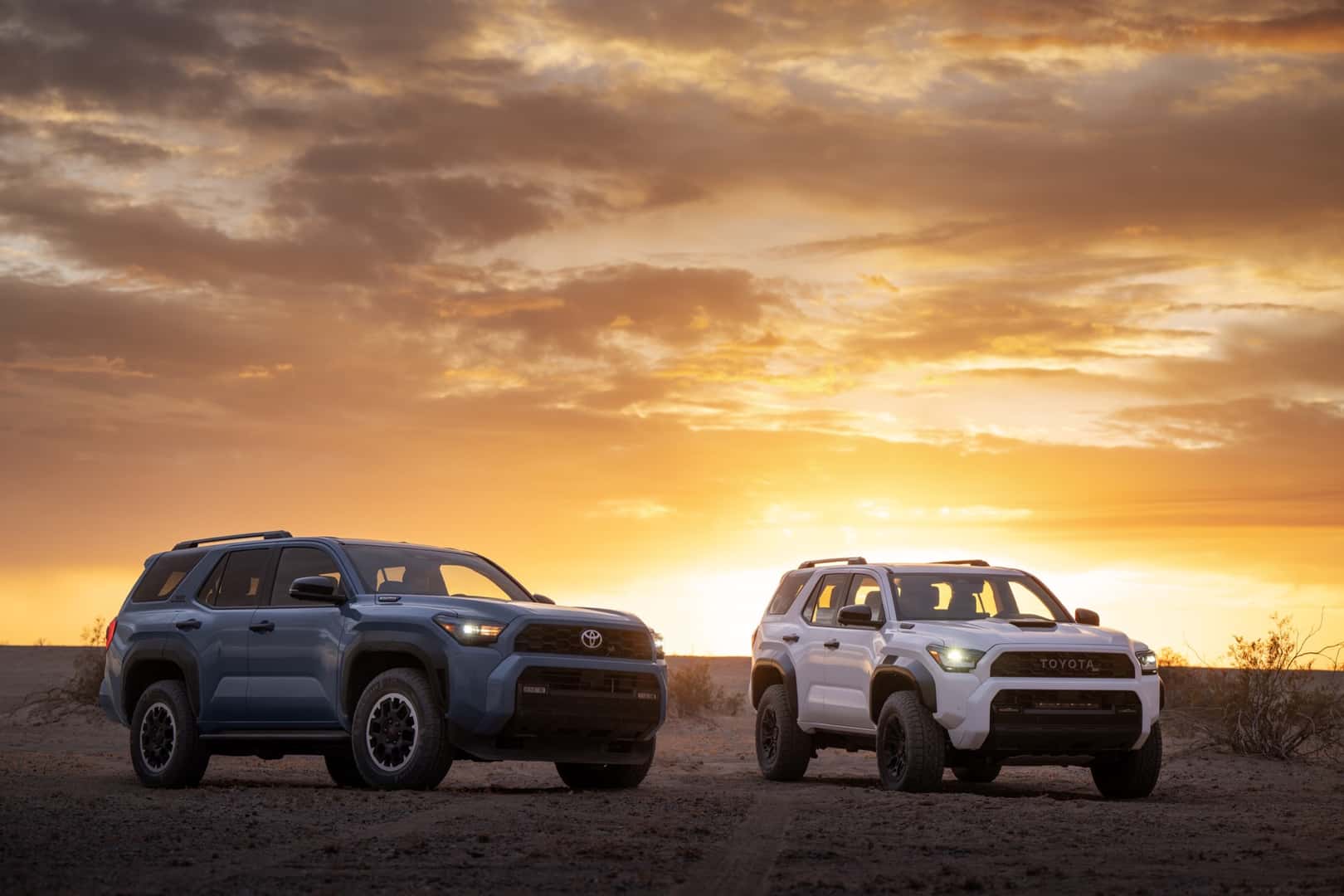
Winterizing Your Toyota for Big Bear, Vegas and Holiday Road Trips
Battery, tires, chains and the AWD vs 4WD question, explained for Victorville, Hesperia, Apple Valley and Adelanto drivers heading out for the holidays.
Victorville winters are mild, but holiday trips are not always. A drive up the mountain to Big Bear, down the Cajon Pass, or out to Vegas means long miles, changing weather and a lot riding on your battery, tires and traction. Here is a practical checklist for getting your Toyota ready, and a straight answer on whether AWD or 4WD means you can skip the chains.
What should I check on my Toyota before a winter road trip?
Start with the basics that matter most when conditions turn. These checks line up with guidance from Toyota and the California Highway Patrol (CHP).
- Battery: terminals clean and tight, and a test if it is getting older
- Tires: pressure (including the spare), tread depth and the right sidewall marking
- Coolant: full, fresh and rated for colder temperatures
- Wipers and washer fluid: replace worn blades before they streak
- Brakes, heater and defroster: all working before you leave
- Emergency kit and chains packed and ready
Not sure what is due on your Toyota? Our Service team in Victorville can look it over before you go.
Should I have my Toyota battery tested before holiday travel?
If your battery is a few years old, or you have noticed slow starts, a test before a long trip is cheap insurance against getting stuck far from home. Toyota’s maintenance guidance says to check the battery whenever you check your fluids, and to look for corrosion or buildup on the contacts. A buildup can be cleaned off with a battery brush, and a dealer can do it for you.
A dead battery on a mountain road or a Nevada highway is a bad place to find out, so ask us to test it when you bring the car in.
What tire checks matter before Big Bear or a Vegas drive?
Tires are the biggest single factor in how your Toyota handles in the cold. Toyota says braking on snow and ice can take four to ten times longer than normal, so what is under you matters.
- Check pressure with a gauge, and do not forget the spare
- Check tread with the tread wear indicators or the penny test
- Look for M+S or “Mud and Snow” on the sidewall if you want snow-tread tires
- Rotate and balance if you are due
Toyota’s maintenance guidance suggests the penny test for checking tread. If your Toyota has a tire pressure monitoring system, pay attention to the warning light, but still check with a gauge. Our Service team can help you match the right tires to your vehicle.
Do I need snow chains if my Toyota has AWD or 4WD?
Possibly, yes. When snow hits mountain roads like the ones up to Big Bear, Caltrans can put chain controls in place, and AWD or 4WD does not automatically exempt you. Here is how Caltrans describes the three levels.
| Chain control | What it means | AWD and 4WD vehicles |
|---|---|---|
| R-1 | Chains required on most vehicles | Passenger vehicles and light trucks under 6,000 lbs gross weight are exempt with snow tires on at least two drive wheels |
| R-2 | Chains or traction devices required on most vehicles | Exempt only if all four wheels have snow-tread tires, and you must still carry traction devices |
| R-3 | Chains or traction devices required on every vehicle | No exceptions |
Source: Caltrans chain control guidance. Conditions and rules change, so check before you go.
The takeaway: AWD and 4WD help you get moving, but they do not help you stop, and the rules still expect the right tires and traction devices in the car. Carry chains that fit your tires, and check your owner’s manual for what your Toyota allows. Pull completely off the road to install them, and slow down, since chain control areas typically limit speeds to 25 or 30 mph.
What is the difference between AWD and 4WD on a Toyota?
Toyota says its AWD systems send more power to the wheels with the best traction, which helps with handling and acceleration on slippery roads. Four-wheel drive, found on many trucks and SUVs, typically adds a transfer case and is aimed at tougher conditions. Here is how that plays out on the Toyotas High Desert drivers ask about most.
Toyota 4Runner
According to Toyota, the 2026 4Runner comes in 2-wheel drive, part-time 4-wheel drive, and full-time 4-wheel drive. Four-wheel-drive models use a two-speed transfer case with high and low range, and the Limited (on i-FORCE MAX models) and Platinum grades use full-time 4WD. Multi-Terrain Select is available for mud, dirt and sand. Toyota does not list a dedicated snow mode for the 4Runner, so tires still matter.
Toyota Tacoma and Tundra
Both trucks are available with four-wheel drive on select grades, and drivetrain details differ by grade and model year. Ask us which grades offer 4WD and what each one is designed for.
Whatever you drive, the same rule holds: traction systems are only as good as the tires they are sending power through.
What should I pack in my Toyota for a holiday road trip?
Toyota and the CHP both recommend carrying more than you think you will need, especially if you are heading into the mountains.
- Chains sized for your tires, plus gloves to put them on
- Flashlight with spare batteries
- Ice scraper, small shovel and a broom
- Jumper cables and tow straps
- Warm clothing, boots, blankets, water and snacks
- A spare key, in case you lock yourself out while installing chains
Keep your gas tank full, start early, and check road conditions before you leave.
What else do Victor Valley drivers ask about winter prep?
Do I really need winter prep if I just drive around Victorville?
For daily driving, the basics (battery, tires, wipers) are still worth a check. The bigger reason to prepare is holiday travel to the mountains, Vegas or other states, where conditions can be very different from home.
Are all-season tires enough for Big Bear?
Caltrans says snow-tread tires are marked M+S, M/S or “Mud and Snow” on the sidewall. Check your tires for that marking, and carry chains either way, since R-3 has no exceptions.
Where can I check road conditions before I leave?
The CHP recommends the Caltrans road conditions hotline at 1-800-427-7623. Check right before you go, and again if your plans change.
Can Valley Hi Toyota help me get my vehicle ready?
Yes. Schedule a visit with our Service team in Victorville and tell us where you are headed, and we can go over the items above with you.
More from the Valley Hi Toyota blog: model guides, comparisons, recall updates and High Desert driving tips.
Get your Toyota road-trip ready
Book a visit with our Service team before you head out, or browse the trucks and SUVs built for the trip.
Winter driving guidance is based on information from Toyota USA, the California Highway Patrol and Caltrans. Chain control rules and road conditions change, so confirm before you travel. Drivetrain features vary by model, grade and model year. Valley Hi Toyota, 14612 Valley Center Dr, Victorville, CA 92395.
0 comment(s) so far on Winterizing Your Toyota for Big Bear, Vegas & Holiday Trips