

A Comparison of the Sienna and Kia Carnival Hybrid
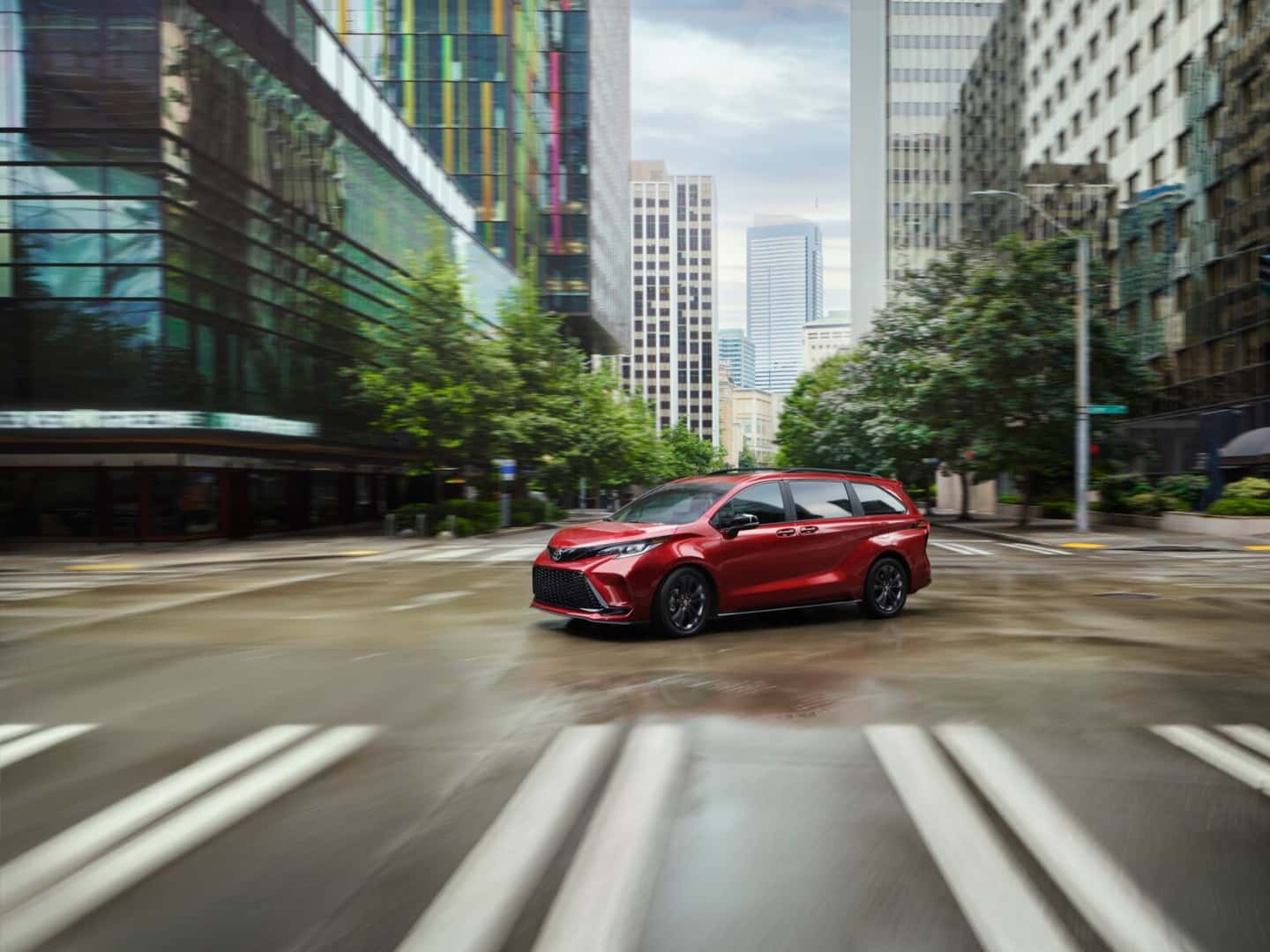
SUVs have stolen the spotlight for years, but minivans remain the most practical vehicle choice for those who need to carry a lot of people and/or things. It makes even more sense when the minivan is a hybrid. It keeps them efficient yet responsive for all their daily duties, and, as they are arguably the best road-trip vehicle type in existence, it keeps the cost of fueling that road trip low. Of the four minivans, the Chrysler Pacifica offers a plug-in hybrid, while the Honda Odyssey offers no hybrid model at all. What remains in this Valley Hi Toyota comparison: The Kia Carnival and the Toyota Sienna.
Kia offers both conventional and hybrid versions of the Carnival, with four hybrid trim levels. As is the case with many of its model lines, Toyota saw no point in offering anything but a hybrid drivetrain in the Sienna.
Like many of Toyota’s hybrid models, the core of the system is a 2.5-liter inline-4. When combined with Toyota’s Synergy Hybrid system, it produces 245 horsepower. After being managed by an eCVT, power can be sent to either the front wheels or all four wheels via All-Wheel Drive.
The Carnival system starts with a 1.6-liter turbocharged inline-4 that pairs with an electric motor to produce 242 horsepower, just a hair under the Sienna’s output. It is paired with a conventional 6-speed transmission that sends power only to the front wheels.
Of course, the term “hybrid” evokes fuel economy. At 34 city, 31 highway, and 32 combined, the Carnival hybrid beats its non-hybrid model by six mpg on the highway and a whopping 16 mpg in the city. However, it doesn’t quite match the Sienna, which has 36 mpg across the board for the FWD model and 34 city, 36 highway, and 35 combined for the AWD models, which are available across the model line.
| Hybrid spec | Toyota Sienna | Kia Carnival Hybrid |
|---|---|---|
| Engine | 2.5L inline-4 hybrid | 1.6L turbo inline-4 hybrid |
| Horsepower | 245 hp | 242 hp |
| Transmission | eCVT | 6-speed |
| Drivetrain | FWD or AWD | FWD |
| MPG (city/hwy/combined) | 36/36/36 FWD, 34/36/35 AWD | 34/31/32 |
| Third-row legroom | 38.7 in | 35.6 in |
| Cargo behind third row | 33.5 cu ft | 40.2 cu ft |
| Maximum cargo | 101 cu ft | 145.1 cu ft (third row removed) |
The vans took different routes in their exterior design. With its blocky 2-box design, slab-sided doors, and rectilinear proportions, the Carnival has gone for an overt SUV look, though its sliding side doors undermine it a bit. The SUV design language on the Kia seems ironic, since it is the Sienna that offers all-wheel-drive traction optimization. The Sienna is simply a modern take on the classic minivan shape, with an aerodynamic front, contoured side surfaces, and a gently curving rear. The preference between the two will clearly be in the eye of the beholder.
The Sienna’s interior prompted this wording from Autoblog:
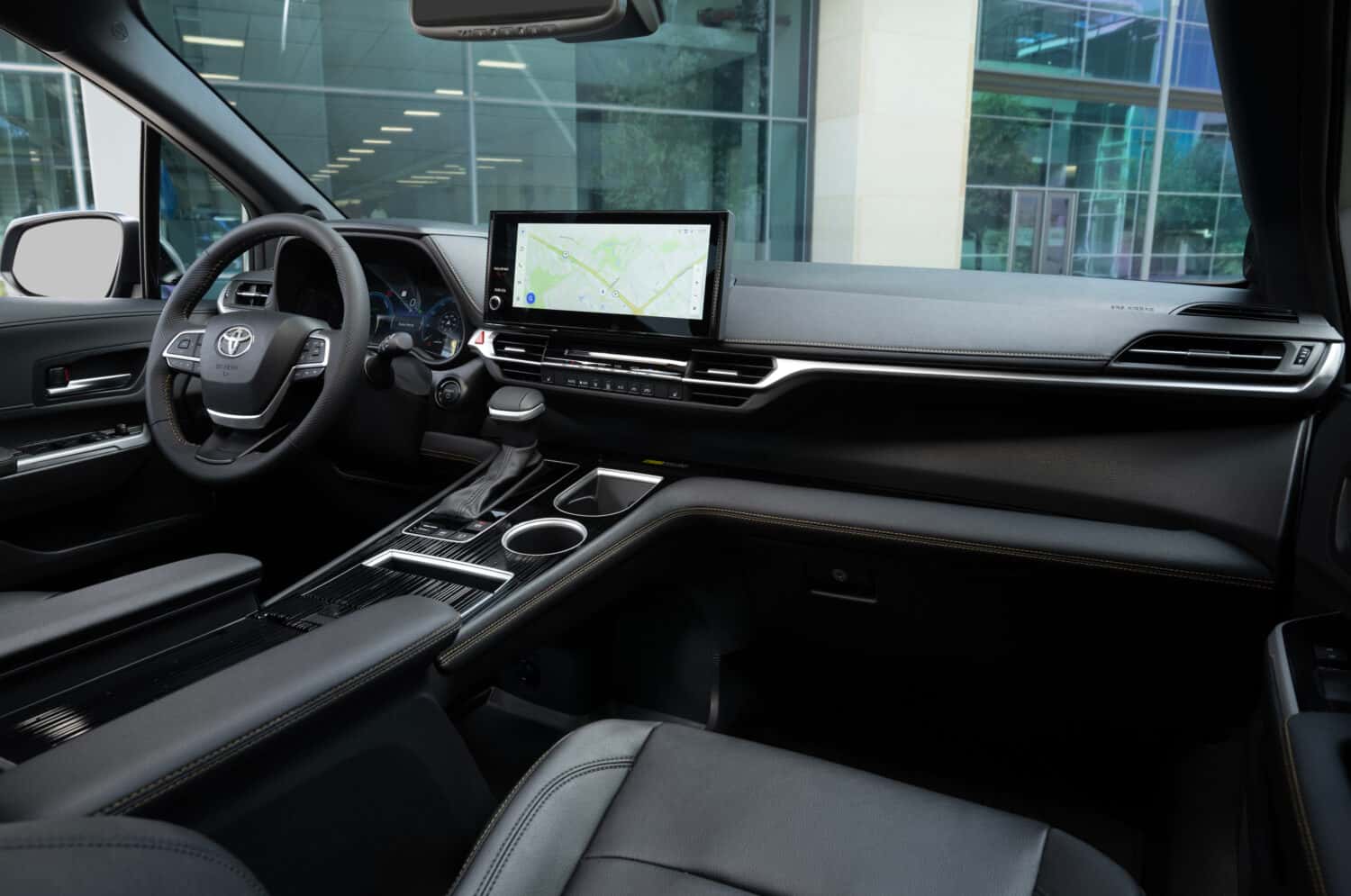
“Inside, the Sienna feels mature and thoughtfully designed. The cabin favors comfort over flash, with soft materials, wide, supportive seats, and excellent climate control for all three rows. Second-row captain’s chairs slide far and feel genuinely premium, while cargo space remains competitive even with the hybrid battery onboard. It’s the kind of interior that keeps everyone calm and content after hours on the road, which may be its greatest strength.”
Autoblog
On entry-level models, the Sienna and Carnival differ in which features are standard and which require an upgrade. For instance, the Sienna base LE gets an 8-inch center touchscreen, which grows to 12 inches for the rest of the model line. XSE and above models feature a 12.3-inch digital driver display. The Carnival features a standard 12.3-inch screen that shares its housing with a similarly sized digital driver display. Wireless smartphone compatibility is standard across both model lines. Both also have standard tri-zone climate control, though the Sienna transitions to four-zone climate control above the base LE.
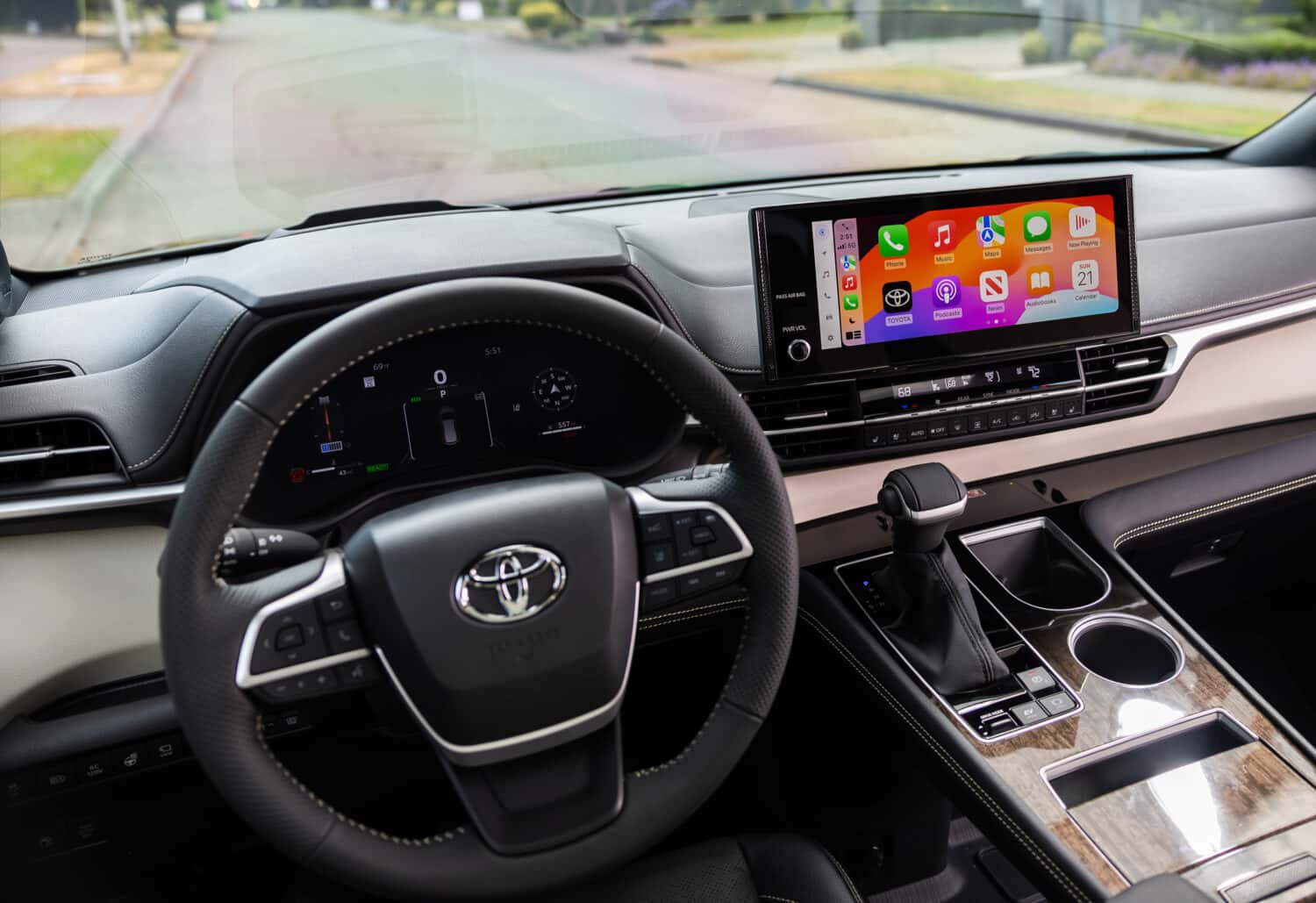
An eight-speaker audio system is standard on the Sienna, while the Carnival starts with a 6-speaker system and adds two more speakers at the next trim level. Heated seats are standard on the Carnival, while they require one step up on the Sienna. At the top of the model lines, the Sienna features a 12-speaker JBL system, and the Carnival has a 12-speaker Bose system.
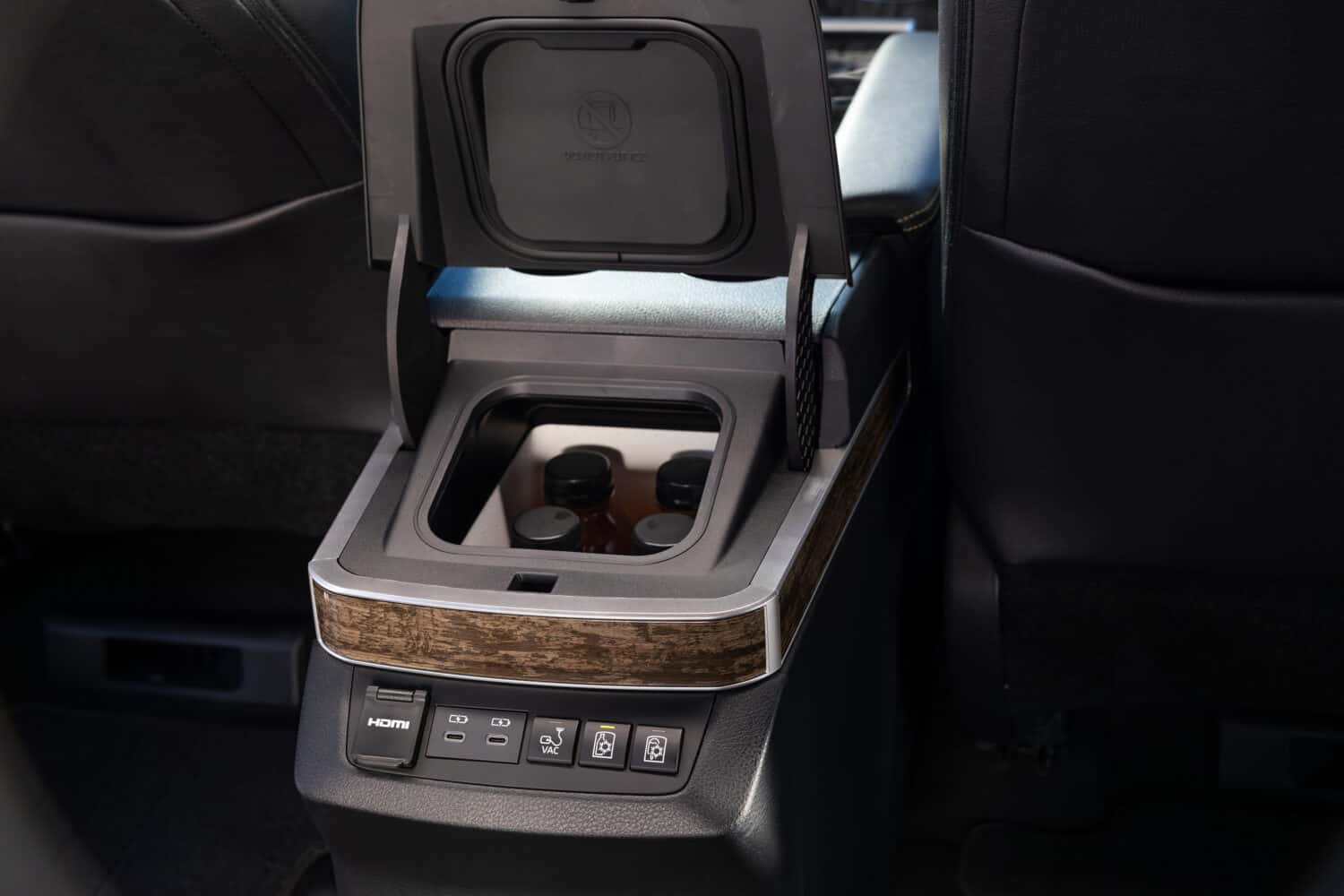
The Sienna is rated at 38.7 inches of third-row legroom, while the Carnival offers 35.6. This is a bit fuzzy, however, because the second-row seats in the Sienna slide a good 25 inches, providing limousine-like space when there is no one in the third row. This also allows for Lazy-Boy-like reclining second-row seats with fully swing-up ottoman leg rests.
They can also slide up right behind the front seats, which is helpful because the seats aren’t designed to be easily removed, unlike on the Carnival. Behind the third row, the Sienna offers 33.5 cubic feet, expanding to 75.2 cubic feet when the third row is stowed into the floor. When the second row is folded forward and the seatbacks are folded flat, you have a maximum cargo space of 101 cubic feet.
The Carnival leads the cargo space contest with 40.2 cubic feet behind the third row, 86.9 cubic feet when the third row is folded, and a maximum of 145.1 cubic feet, which requires removing the third-row seat and storing it elsewhere. The second-row bench seat folds flat, but the captain’s chairs do not.
On the road, Autoblog found the Sienna to have a slightly more comfortable highway ride:
“The Sienna is far less bouncy over road imperfections and cruises nicely on the highway. Still, I think the Kia Carnival is slightly more competent for those who want a bit more athleticism.”
Autoblog
Both models feature a full array of safety and driver-assistance technologies. The Sienna has a 5-star overall rating from the NHTSA and is designated a TOP SAFETY PICK by the IIHS. The Carnival has not been tested by the NHTSA and is not an IIHS TOP SAFETY PICK, with lower scores on the side-impact test and in other areas.
Both models have their advantages, but the Sienna offers a bit more power, better fuel economy, and better safety ratings. As a hat trick, the Sienna is expected to retain 60-63% of its value after 3-5 years, while the Carnival is expected to retain approximately 55%, all things being equal. That means, when compared against the Carnival, the Sienna is less expensive to operate and is likely to have higher resale value when the time comes. If that level of ongoing affordability appeals to you, visit Valley Hi Toyota to explore and test drive a Sienna.
0 comment(s) so far on A Comparison of the Sienna and Kia Carnival Hybrid